- service@nationaldetectives.in
- +91 8800462341

Fraud Investigation vs Fraud Detection: Difference Between the Two
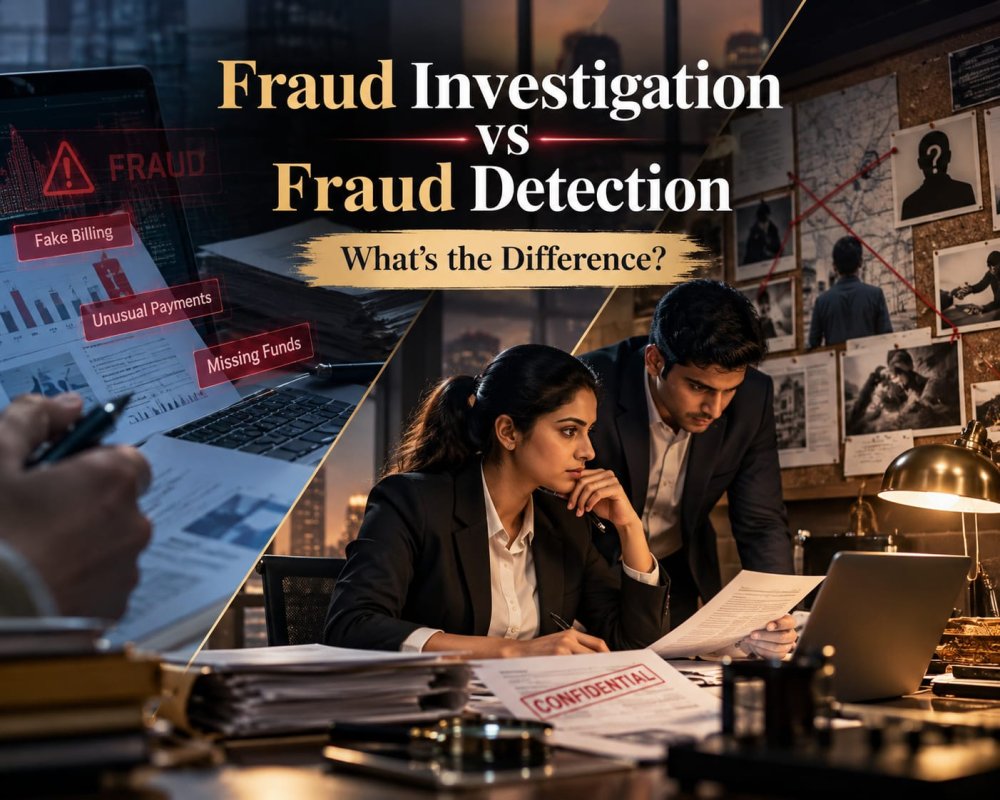
Fraud can happen in a business in different ways. Someone may submit fake bills, use company money for personal work or give false details during a business deal. In some cases, the company notices the problem early. In other cases, the fraud comes to light after money has already been lost.
Fraud detection and fraud investigation both help a business deal with fraud but their roles are different. Fraud detection helps spot signs of fraud while fraud investigation checks the facts and identifies those involved.
What Is Fraud Detection
Fraud detection is checking unusual activity in a business. This includes extra charges in bills, payments without approval or money missing from company accounts.
Regular checks can help a business find problems early. Some signs include:
• Payments made without permission.
• Wrong or repeated bills.
• Missing money from company accounts.
• Unusual actions by employees or vendors.
• Stock records that do not match the actual stock.
These signs do not always mean fraud but checking the records can help the business understand the issue before making any decision.
What Is Fraud Investigation
Fraud investigation starts when there is a reason to look into a suspected fraud case. The purpose is to check the available information and find out what actually happened.
For example a company pays a contractor for work that was never completed. The owner notices the payment later and needs to check the matter. A private detective can help by checking the bills, payment details and related records.
A fraud investigation include:
• Checking bills and payments for mistakes.
• Going through company emails and records with permission.
• Speaking to employees or vendors involved in the matter.
• Checking claims made by an employee or supplier.
• Preparing a report with the details found during the investigation.
The findings should be based on truth. A person should not be blamed only because their name shows in a payment record.
Fraud Detection vs Fraud Investigation
Fraud detection and fraud investigation both help a business deal with suspected fraud. Sometimes a company notices extra charges in bills, missing payments or unusual activity in its accounts. Here we discuss the difference between them.
| Fraud Detection | Fraud Investigation |
| Finds signs of possible fraud. | Checks suspected fraud in detail. |
| Looks for unusual payments and bills. | Examines bills, records and evidence. |
| Helps spot problems early. | Helps find the facts behind the problem. |
| Shows when further checking is needed. | Helps the business decide on further action. |
For example a company notices two payments for the same order. Fraud detection flags the extra payment, while fraud investigation checks the bills and payment records to find out whether it was a mistake or fraud. Both can help a business identify financial problems and take suitable action to prevent further losses.
When Does a Business Need Fraud Detection
A business need fraud detection when payments do not match the bills or company money is being spent without a clear reason. For example an owner notice repeated vendor payments or extra charges in employee expense claims. These issues need to be checked before the company loses more money.
Fraud detection can help check:
• Check employee expenses and bills.
• Check vendor payments and extra charges.
• Review customer payments and refunds.
• The review company accounts for incorrect entries.
Checking these details regularly can help a business understand unusual activity early. If the same problem keeps happening then investigation is important.
When Is Fraud Investigation Required
A fraud investigation required when a company has some doubts about its records or receives a complaint that needs proper checking.
A company finds that an employee has claimed money for expenses that never happened or a vendor has charged for goods that were not delivered. The company can check the bills and payment records before making any decision.
An investigation useful when:
• Money is missing from company accounts.
• Fake documents or bills are suspected.
• An employee or vendor has provided false information.
• The same financial issue keeps happening.
• The company needs a written record of the findings.
The investigation should be done legally and confidentially.
Can Fraud Detection and Fraud Investigation Work Together
Fraud detection and fraud investigation can work together. Detection helps find unusual activity and an investigation checks the reason behind it.
For example a company finds that some items are missing from its stock. The team can check stock records, delivery details and other entries to find the truth.
Sometimes it is just a mistake in the records. In other cases the items have been taken without permission. Checking the truth helps the company understand the actual problem.
Choosing a Fraud Investigation Service
When a business finds missing money, fake bills or payments that do not match the records it need help from a fraud investigator. The investigator checks the details and tries to find out the reason behind the problem.
Before hiring anyone explain the case and ask about the work process. Check the charges, privacy rules and the report you will get after the investigation. Fraud detection helps find signs of fraud while fraud investigation checks the details behind those signs. Both can help a business deal with suspicious activity.