- service@nationaldetectives.in
- +91 8800462341

Surveillance Investigation: Uses, Process, Benefits and Limitations
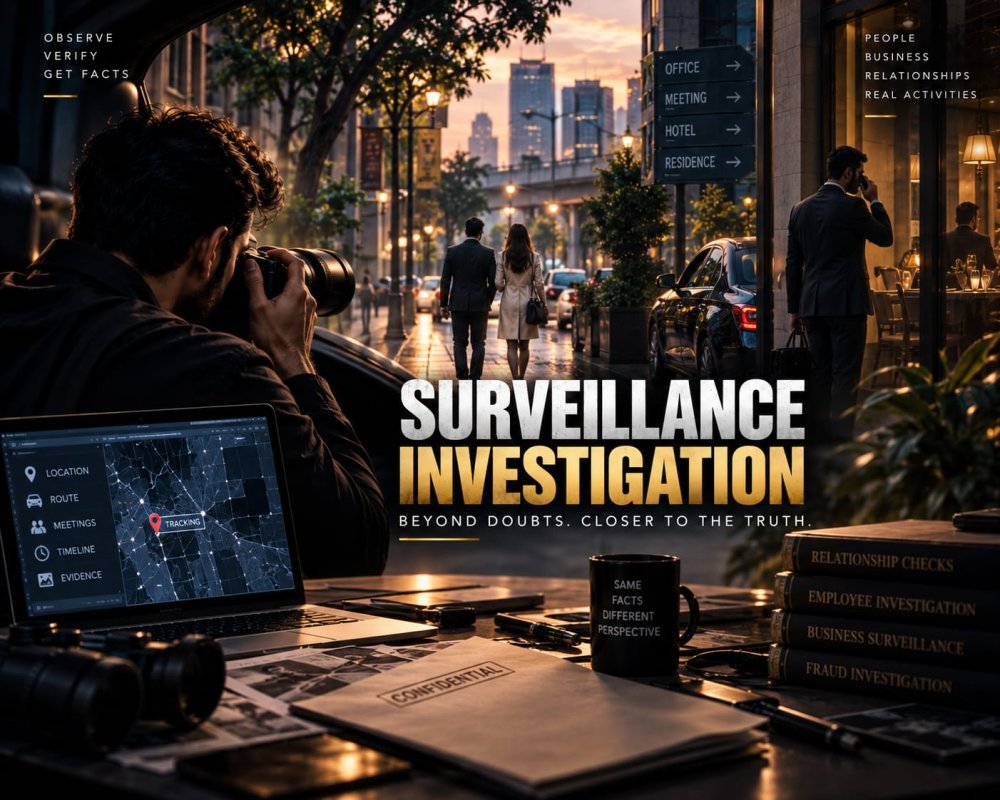
Surveillance is often used in cases where a person’s activities need to be checked closely. It may be related to a spouse, employee, business partner or another person connected with the case.
Instead of making a decision only on doubt, a detective can observe the person’s routine and note important activities. This helps the client understand the case more clearly.
What Is Surveillance Investigation?
Surveillance investigation is a process of watching a person, place or activity for a particular case. A private detective watches the person’s movements, notes their activities and collects useful details during the investigation.
The detective stays at a safe distance and does not contact the person. Photos or videos can also be taken legally . These details can help the client get a clearer idea of the actual situation.
Common Cases for Surveillance
Surveillance can be useful in many types of cases.
Matrimonial and Relationship Cases
Suspicion in a relationship can create stress when there are changes in a person's routine or behaviour.
A surveillance investigation help verify activities related to:
• Suspected infidelity
• Unusual meetings
• Hidden relationships
• Frequent unexplained outings
• Changes in daily routine
The investigator focuses on facts instead of making doubts.
Employee Related Concerns
Businesses also use surveillance during certain investigations.
It help in cases involving:
• Employee misconduct
• False absence claims
• Misuse of company resources
• Suspicious outside activities
• Internal fraud concerns
Surveillance should always be planned within legally.
Business and Corporate Cases
A business needs investigation support when there are concerns about a partner, employee, competitor or business activity.
Surveillance helps gather information about specific activities connected with the case.
Fraud and Insurance Cases
Surveillance can also be used with fraud detection service in cases involving false claims or suspicious activities. Some people give false information or make a false claim to get money. Surveillance can help check their actual activities
The details found during surveillance can then be compared with the information given in the case.
Personal vs Professional Surveillance
Personal surveillance is mostly used for family or relationship matters. Professional surveillance is more common in business and work related cases.
| Personal Surveillance | Professional Surveillance |
| Mostly used for family or personal matters | Mostly used for business or work matters |
| Common in marriage related cases | Common in employee and fraud cases |
| Checks a person’s activities | Can check people, places or business activities |
| Usually requested by a person or family | Usually requested by a company or business owner |
| Privacy is a major concern | Keeping business information private is important |
Both types need some planning before starting. The investigation should also be done legally.
How a Surveillance Investigation Works
A professional surveillance case usually starts with a discussion about the concern. The investigator collects basic information about the subject and understands the purpose of the investigation.
1. Case Discussion
The client tells the detective about the problem and shares the details they already have. This can include the person’s name, places, daily routine, vehicle details and other details related to the case.
2. Investigation Planning
The investigator plans the surveillance based on the case. The team decides the suitable location, timing, number of investigators and type of observation needed.
3. Field Surveillance
The investigator observes the subject without unnecessarily interfering with their activities.
The team may record movements, meetings, locations, and other relevant details.
4. Evidence Collection
Photographs, videos, notes, time records, and other lawful evidence may be collected during the investigation.
The evidence should be related to the purpose of the case.
5. Investigation Report
After the investigation, the client gets a report with the main findings. It may include dates, notes, photos, videos and other useful details.
Benefits of Surveillance Investigation
Professional surveillance can be useful because it provides information based on observation.
Some benefits include:
• Helps verify suspicious activities
• Provides useful evidence for a case
• Helps confirm or clear doubts
• Saves the client from personally following someone
• Keeps the investigation confidential
• Provides proper documentation
• Can support personal and business investigations
A professional investigator keeps some distance and avoids direct contact with the person.
Limitations of Surveillance
Professional surveillance can help in finding useful information but it does not always give a clear result. The person may change their routine that is why it is difficult to observe their activities.
| Advantages | Disadvantages |
| Helps check a person’s activities | Can take time |
| Photos or videos may be useful | Person may change their routine |
| Can help clear doubts | Some places cannot be watched |
| Useful for personal and business cases | Traffic or bad weather can cause problems |
| Can show repeated activities | More days can increase the cost |
| Done by a trained detective | Privacy and legal rules must be followed |
Surveillance can be helpful but the result depends on the person and the situation.
Legal and Ethical Side of Surveillance
Surveillance needs to be done legally. A detective cannot watch or collect personal information in any process just for getting evidence. Privacy also needs to be respected during the investigation.
Illegal processes can create problems for both the investigator and the client. Hacking accounts, using someone’s password without permission, entering private property or recording in restricted situations should be avoided.
Some basic points include:
• Follow the applicable laws during the investigation.
• Avoid hacking or accessing private accounts.
• Do not enter private property without permission.
• Collect only information related to the case.
• Keep the client’s information confidential.
• Use legal process for photos, videos and other evidence.
Good surveillance is based on proper investigation, legal process and privacy
Professional Surveillance vs Personal Tracking
Professional surveillance is done by a trained detective. Personal tracking is usually done by a person on their own. Both involve watching someone but the way they are done is different.
| Professional Surveillance | Personal Tracking |
| Done by a trained detective | Done by the person himself |
| Planned before the investigation | Often done because of doubt |
| Details are properly noted | Details can be missed |
| Detective stays away from personal emotions | Anger or emotions can affect the person |
| Information is kept private | Information may be shared with others |
| Follows legal rules | Privacy rules may be broken |
For sensitive cases professional surveillance can help avoid mistakes.
Is Surveillance Suitable for Every Case?
No. Surveillance is not required for every investigation.
A detective first reviews the available information and understands the actual problem. In some cases, background verification, digital investigation, document checking or another investigation service are more suitable.
Surveillance becomes useful when direct observation can help verify a specific concern. The investigation should always have a clear purpose.
Final Thoughts
Surveillance investigation can be useful if someone needs to check a person’s activities instead of doubt. It helps in cases related to marriage, employees, fraud or business problems.
The result also depends on the timing, planning and experience of the investigator. Not every case needs surveillance that is why discuss the matter first and decide if surveillance is actually needed or not.
A good private detective agency will look at the case, understand the main concern and then choose the right process to investigate it. The investigation should also be done carefully and legally.