- service@nationaldetectives.in
- +91 8800462341

What Information Can a Private Detective Find During an Investigation?
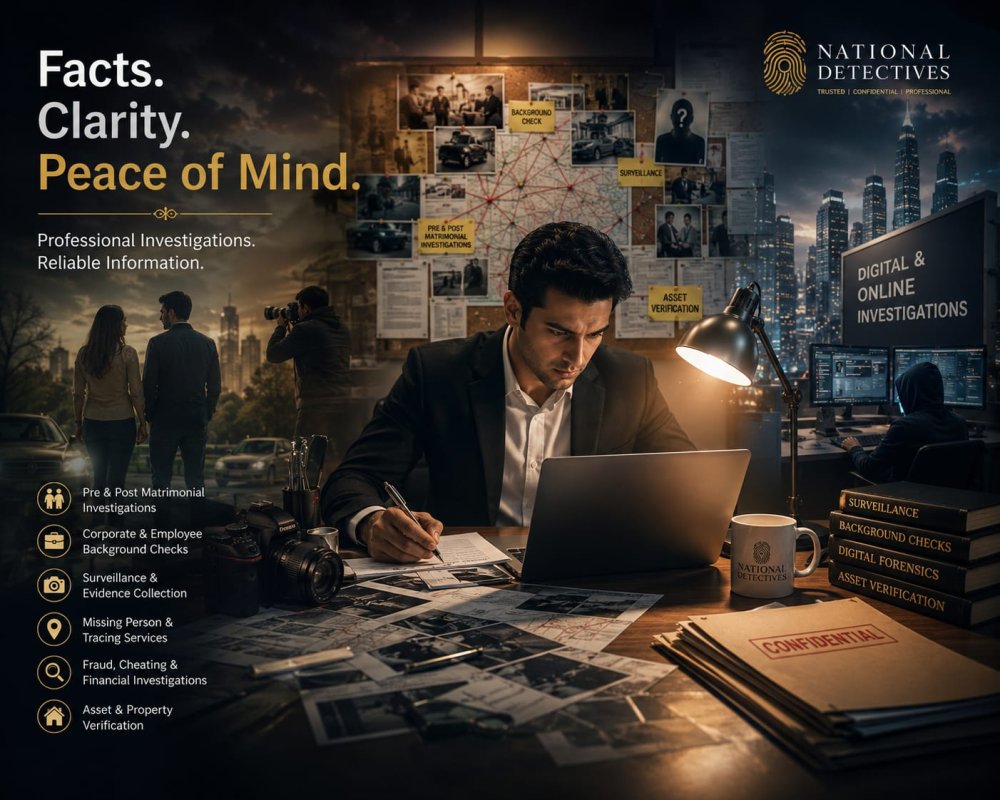
When people think about hiring a private detective first they think that is what an investigator can actually find and the answer depends on the type of case, the information available and the reason for the investigation.
A private detective is not only hired to find hidden information. Their main job is to check facts, verify details and collect useful information related to a case. The investigation includes background checks, surveillance, document checks, or other legal processes.
Here are some common types of information a private detective can find during an investigation.
Personal Background Information
Background check can be useful in verifying basic facts about a person.This can be useful before marriage, while hiring someone, before starting a business partnership or in other important situations.
A private detective verify:
• Basic identity details
• Education and qualifications
• Employment history
• Professional background
• Address history
Business connections
The investigation focuses only on information that is relevant to the case.
Employment and Education Verification
A person gives wrong or incomplete details about their job or education. Before trusting these details, it can be useful to check whether they are true.
A private detective check:
• Where the person works or worked
• Their job role
• Previous work experience
• Work duration
• College or university details
• Professional qualifications
• Details written on their resume
This can be helpful to employers, business owners or anyone that needs to verify the work and education details of a person before making an important decision.
Pre-Matrimonial Investigation
Before marriage people want to know whether the information shared by a partner is genuine. A pre-matrimonial investigation can help verify important details before making a personal decision.
Depending on the case, an investigator check:
• Job details
• Education
• Business & Family background
• Relationship status
• Previous marriage information
The purpose is not to interfere in someone's private life without reason. It is to verify relevant information that affects the marriage decision.
Infidelity and Relationship Investigations
If a partner's behaviour suddenly changes, it can sometimes raise doubts about the relationship. Instead of making doubts some people hire a private detective.
During an investigation, a detective find:
• Regular meetings or outings
• Visits to particular places
• Changes in daily routine
• Contact with another person
• Activities that are important to the case
• Photos or videos, if legally allowed
The main focus is to find clear facts so the client can understand the situation better.
Business and Corporate Investigation
Private detectives also conduct investigations for businesses. Companies should check employees, business partners, vendors or other people involved with their business.
Corporate investigations involve:
• Employee background checks
• Business partner verification
• Vendor verification
• Company ownership details
• Business connections
• Suspicious business activities
• Internal fraud concerns
With proper verification, a business can identify potential risks before they turn into serious financial or operational problems.
Fraud Related Information
Fraud can happen in personal matters or in a business. If something looks suspicious, a private detective can check the available details and help find out what is really going on. An investigator can review:
• False identity information
• Suspicious transactions/activities
• Theft of company funds or property
• Workplace issues
• Persons related to the case
Then we report the findings to the client in a clear manner so that they understand the situation easily.
Surveillance Information
Surveillance is a part of many private investigations. A detective observes the person or the activity related to the case and notes useful details without participating.
During surveillance an investigator check:
• Daily movements
• Meetings with other people
• Visits to different places
• Changes in routine
• People they meet
• Photos or videos, if legally allowed
The information collected can help the client understand the situation based on actual observations.
Missing Person Details
Finding a missing person can be difficult especially when the family doesn’t have much information. The private eye can use the information at hand to look for useful clues.
The investigation could include checking:
• Former addresses
• Contacts and friends
• job details
• Family/Social backgrounds
• Public Documents
• Places the person was known to frequent
• Other information provided by the family
The search is organised by the information available in each case.
Digital & Online Information
The internet can also be useful in an investigation because publicly available information online can help verify a person’s professional background, business connections or other relevant claims.
OSINT and Social Media Intelligence help Private Detectives Uncover Hidden Truths by helping investigators review information that is already publicly available online. A review for the investigators:
• Public social media accounts
• Professional profiles
• Public business data
• Advertisements online
• Public posts
• Corporate Websites
Other publicly available information
Asset & Property Verification
Asset verification needed in any situation where a person’s financial claims need to be checked, such as in business problems, legal cases or financial issues.
The investigator assist in the verification of information relating to:
• Ownership of property
• Business interests
• Vehicles.
• Assets known
• Connections to companies
• Other pertinent information from lawful sources
The information depends on the purpose of the investigation and the records that can be legally checked.
Evidence Collected During an Investigation
Finding information is only one part of professional investigation work. The information also needs to be properly recorded and organised.
Depending on the case an investigator provide:
• Written findings
• Dates and times
• Relevant observations
• Photographs
• Video evidence where legally permitted
• Verification details
• Other supporting information
• A final investigation report
A clear report helps the client understand the findings without having to sort through unrelated information.
The Information Depends on the Case
Every investigation is different. A matrimonial investigation focuses on a person's background and relationship status while a corporate investigation service focuses on employees, business partners, fraud or financial irregularities.
The details you provide at the start can also help with the investigation. A person's name, photo, phone number, workplace, address, or business details can help the detective understand the case and plan the investigation better.
Choose a Professional Private Detective
If you think of hiring a private investigator don't select an agency just because they promise fast results. Ask about their experience, confidentiality, investigation process, process of reporting and approach to handling sensitive information.
A professional investigator will work with the facts, keep confidentiality and observe the applicable laws during the investigation.
Conclusion
Depending on the case, a private investigator can locate and verify many types of information. This includes personal background information, employment and educational records, relationship information, business connections, fraud issues, surveillance results, information about assets, and any other facts.
The main purpose of the investigation is to replace doubts and unconfirmed statements with reliable information. If you have a personal, matrimonial, business or fraud related concern, a professional investigation can help you to know the facts and to have a better understanding of the situation.