- service@nationaldetectives.in
- +91 8800462341

How Private Investigators Trace a Missing Person Using Digital and Public Information
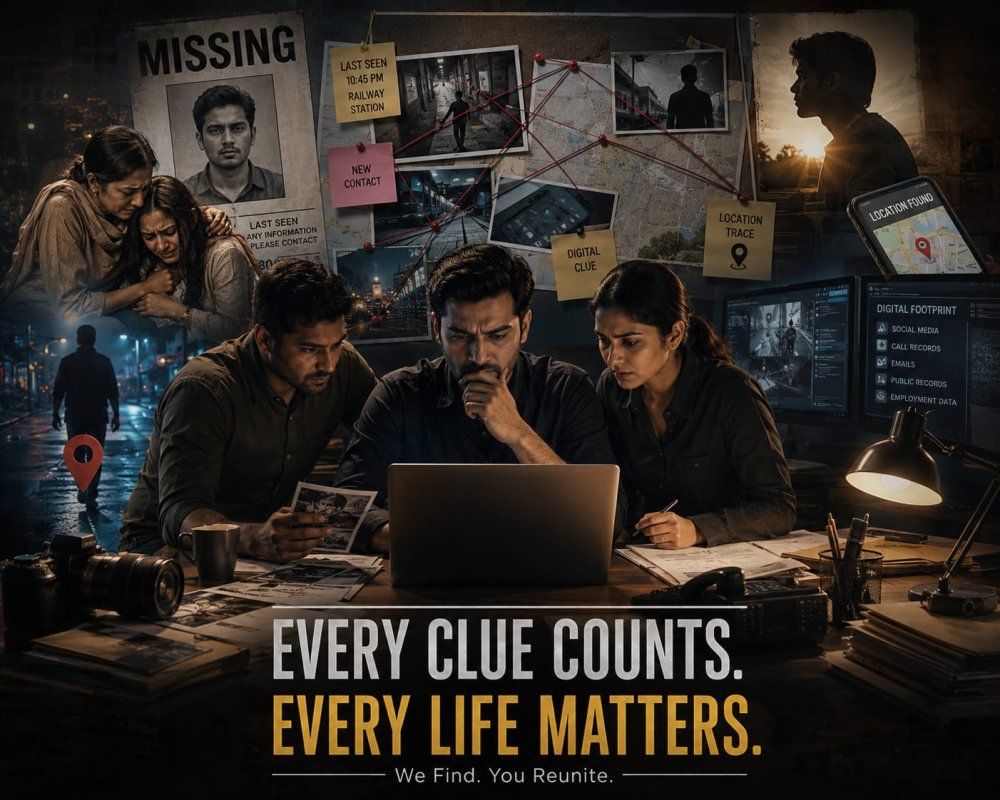
When someone goes missing,the first few hours can be very important. Family members do not know where to start or what information can help find the person.
Private investigators can help by collecting available information and following different clues. They use digital information, social media and other legal sources to understand the missing person location. The process is not always quick. Every case is different, that is why the duration of the case depends on the situation.
Start With Basic Information
Before starting an investigation a private investigator collects basic details about the missing person. This include:
• Full name and other names used by the person
• Recent photographs
• Phone numbers and email addresses
• Last known address
• Workplace or college details
• Names of friends and relatives
• Last known location
• Any recent problems
Even small details can sometimes help to connect everything
Checking Social Media
Social media can provide some clues in missing person cases. Investigators check Facebook, Instagram, LinkedIn or other websites.
They look for:
• Recent posts or photos
• Public comments
• New friends or connections
• Places mentioned in posts
• Public activity linked to the person
Sometimes an old profile can also provide information about the person's friends, workplace, interests or places they regularly visited.
Private investigation agencies should use only information they are legally allowed to access. They should not hack accounts or use stolen passwords.
Find Public Records
Public records can sometimes help to find important details about a person's background or recent activity. Depending on the case and local laws investigators check information such as:
• Address records
• Property records
• Business information
• Court records
• Public employment information
• Other legally available records
The purpose is not to collect every detail about a person. It is to find information that can help in investigations.
Following Digital Clues
Digital information can sometimes give useful clues about a missing person's location or their activity before they are missing.
Investigators check legally available information such as:
• A new workplace or job
• Changes in social media profiles
• New phone numbers or contact details
• New friends or online connections
• Recent activity on public profiles
Sometimes one small clue helps investigators understand the person's recent activities.In some cases Digital Forensic Investigation can also help verify available digital proof and find useful information connected to the case.
Talking to People Who Know the Person
Digital information is only one part of a missing person investigation.
Private investigators also talk to people who know the missing person like friends, former colleagues, neighbours or other contacts. They ask about:
• When they last spoke to the person
• Their last seen
• Whether the person mentioned any plans or not
• Whether they had recently made new friends or not
• Whether there were any major changes in their life or not
People sometimes remember small details that the family does not know.
Checking Employment and Business Connections
A person's work can sometimes give some information when they are missing. If they recently changed their job and started new work or stopped going to work then these details help investigators find clues.
Investigators check:
• Recent job changes
• New company or workplace
• Business details linked to the person
• Public professional profiles
• Work connections in another city
• Changes in their work location
This information can help investigators find the person's possible location and recent contacts.
Connecting Different Pieces of Information
The important part of an investigation is connecting separate pieces of information.
For example:
Social media post → New contact → New city → Workplace information → Possible location
One clue is not enough. But if some details match then they can help the investigator find clear clues.
Privacy and Legal Limits
Private investigators always investigate legally. They should not:
• Hack personal social media or email accounts
• Steal passwords
• Track someone illegally
• Access private information without proper authority
A professional investigation service should be based on legal and ethical processes.
What Family Members Can Do
Family members can make the investigation easier by providing useful information like:
• Recent photographs
• Phone numbers
• Known addresses
• Details of close contacts
• Workplace information
• Vehicle details
• Social media usernames
• Last known location
• Any recent messages or important information
It is also important not to delete messages, photographs, emails or other information that may help later.
Final Thoughts
Finding a missing person can be difficult when there is very little information available. Private investigators use digital sources, public records, social media, professional information, and conversations with known contacts to find clear information.
Most importantly missing person investigations should be handled carefully, legally and confidentially because it is a very sensitive situation.