- service@nationaldetectives.in
- +91 8800462341

Can Social Media Help Investigators Find Missing Persons
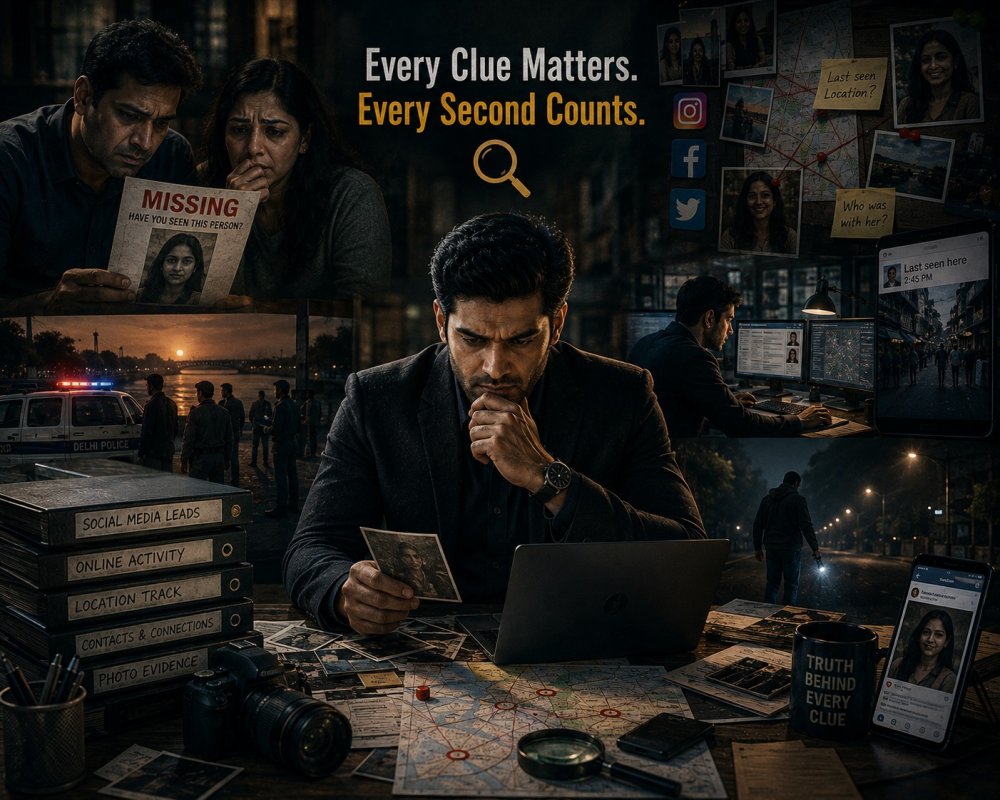
When someone goes missing, family members start looking for them immediately. They call friends and relatives and check the places the person visits.
Social media can also give some clues. A person has shared a photo, post or update before going missing. These details give some idea about the person's recent activity. But not every online post is true. That is why checking the information before using it in the investigation is important.
Importance Of Social Media in Missing Person Cases
People use social media every day. They share photos, posts and updates about their daily life. Sometimes this information can give investigators a useful clue when someone goes missing. Investigators find some things like:
• Their last posts
• Their recent updates
• Changes in social media activity
Sometimes these small details can give an important clue in the investigation.
Social Media Posts Can Give Small Clues
• Sometimes a person shares a post before going missing. It gives some information about their recent activity.
• Investigators can check the post, date and other details and compare them with the information already collected.
• One post does not solve the case but it can give investigators some clues to check.
Checking Friends and Online Connections
Social media can also show a person's public connections. Investigators find publicly available information about:
• Friends
• Recent contacts
• Groups
• Public comments
• People appearing in recent posts
This does not mean every online connection is important. Investigators need to compare the information with the facts of the case.
Photos and Videos Can Help
• Photos and videos shared online contain useful details. For example a photo shows a location, shop, road or event that helps identify where the person was recently.
• A video also provides information about the person's surroundings.
• Private investigators can compare these details with the person's daily routine and other information collected during the investigation.
Check Public Location Information
Sometimes people share their location through social media posts. If this information is available publicly and is connected to the case it helps investigators understand the person's last known location.
However online location information should not be treated as proof by itself. It needs to be checked with other details.
Checking Recent Activities on Social Media
A timeline is important in many missing person investigations. Investigators try to understand:
• When the person was last seen
• Where they went
• Who they were with
• Their activity before they missing
Social media posts help investigators understand about the person's activity before they went missing. For example a post shared earlier in the day gives a clue about the person's recent activity or location.
How Private Investigators Use Social Media Information
Private investigators first understand the missing person case and collect basic details.
After that they check publicly available online information related to the person.
Depending on the case, they:
• Check public social media posts
• Compare dates and locations
• Check public online connections
• Review photos and videos
• Compare online details with other information
• Prepare a report for the client
• The purpose is to collect useful information not to make doubts.
• Privacy and Legal Limits
Social media investigation should be done carefully. Private investigators should use information that is legally available to them. They should not hack accounts, use passwords or access private accounts without permission. This is important in missing person cases because the matter is sensitive.
Real-Life Example
For example, a college student suddenly stops contacting the family. The family knows the student's last location but has no other information about the situation.
During the investigation a social media post is found from the same day. The photo shows a place that the family did not know the student had visited.
Private detective checks the location and compares it with other information. The post does not prove anything but it gives the investigation another point to check.
Sometimes a small detail like this can help investigators understand the person's last known activities.
Checking Information Before Using It
Social media posts are not always genuine. So before using them in a case investigators check some things:
• When the post was shared.
• Whether the details match the person's known activities.
• Whether the original post has been changed.
• Other public information that was found through a Digital Footprint Investigation.
This helps investigators use the right information and avoid confusion in the case.
Conclusion
Social media can sometimes give useful clues in missing person cases. A photo, post or location helps investigators understand a person's recent activities. But these details should always be checked with other information before preparing a final report.
In Delhi missing person cases are also a serious problem where many cases are reported every year. In these situations a private investigation agency in Delhi can help families collect information, check possible leads and understand the situation more clearly.
Social media can support an investigation but it works when online information is checked properly and combined with other investigation processes.